For Beginners, Student Pilots, & Private Pilots:
A Unique 2 Hour & 36 Minute Flight Training Video Course
Shows you how to fly a Cessna 172 from flight planning through shut-down with all details included.
Improves your safety, flight planning, radio communication, and landings.
The Concept
My name is Brendan Quinn-Narkin. I've been a commercial pilot and certificated flight instructor since 2002.
Working as a flight instructor for years, here's something I've noticed: Students perform better in the air, when they take the time to study on the ground. The same goes for private pilots who show up for their flight review. Those who study beforehand, end up doing better. As a result, they are able to finish their flight training or flight review in less time, which means they end up saving money.
Here's the problem: Most flight training study materials are boring! Most deal with theory, rather than real-world flying. Even most flight training videos offer a classroom presentation, rather than showing you actual flying.
Well, a number of years ago, I came up with an idea: What if I could develop a video for my students to watch before flying, where I show them how things are done in the real world. A video where they see me planning a flight and then actually flying, while explaining to them exactly what I'm doing.
I know next to nothing about video production and I wanted to develop a quality product for my students, so I hired a professional videographer. I ended up hiring Jake Richmond, the owner of Volta Productions. I think you'll agree that he did a great job. Here are the instructions I gave Jake: I want the viewer to feel like they are on a lesson with me. During the flight I want them to be able to see the flight instruments, out the window, and exactly what I'm doing. I also want them to hear all of the radio communication.
Jake filmed me doing extensive fight planning, for a rather interesting flight. (more on that later) and then set up cameras in a Cessna 172. One camera went in the back for the forward view, another on the dash so that you can see me and finally a third camera which he held during the flight to show what my hands were doing, closeups of instruments, and views out the window. The rear camera was hooked up to the intercom, in order to capture all of the radio communication during our two flights.
Working as a flight instructor for years, here's something I've noticed: Students perform better in the air, when they take the time to study on the ground. The same goes for private pilots who show up for their flight review. Those who study beforehand, end up doing better. As a result, they are able to finish their flight training or flight review in less time, which means they end up saving money.
Here's the problem: Most flight training study materials are boring! Most deal with theory, rather than real-world flying. Even most flight training videos offer a classroom presentation, rather than showing you actual flying.
Well, a number of years ago, I came up with an idea: What if I could develop a video for my students to watch before flying, where I show them how things are done in the real world. A video where they see me planning a flight and then actually flying, while explaining to them exactly what I'm doing.
I know next to nothing about video production and I wanted to develop a quality product for my students, so I hired a professional videographer. I ended up hiring Jake Richmond, the owner of Volta Productions. I think you'll agree that he did a great job. Here are the instructions I gave Jake: I want the viewer to feel like they are on a lesson with me. During the flight I want them to be able to see the flight instruments, out the window, and exactly what I'm doing. I also want them to hear all of the radio communication.
Jake filmed me doing extensive fight planning, for a rather interesting flight. (more on that later) and then set up cameras in a Cessna 172. One camera went in the back for the forward view, another on the dash so that you can see me and finally a third camera which he held during the flight to show what my hands were doing, closeups of instruments, and views out the window. The rear camera was hooked up to the intercom, in order to capture all of the radio communication during our two flights.
A Look Inside
The final product includes 2 hours and 36 minutes of video. I would describe the video in the following way: It is like you are sitting next to me as I take you through the entire process of planning out a flight and then flying. You get the benefits of both explanations and demonstrations. The camera follows my every move so that you see exactly how I perform all of the tasks involved.
Part 1 includes all the detailed flight planning involved for our flight from the Reid-Hillview Airport (RHV), in San Jose, CA to the Half Moon Bay Airport (HAF) which is on the Pacific coast, just south of San Francisco. This includes a review of the airspace along our route, gathering important information from the chart and the airport facility directory, determining our course, wind correction, heading, flight time and fuel burn. Next is a weight & balance, followed by calculating performance, determining important Vspeeds and obtaining a standard weather briefing. After we complete our preflight planning I provide you with a radio communication tutorial where I talk to you about some techniques I use which make radio communication easier. Next, we head out to the airplane and I sit in the cockpit going over the functions of all of the flight instruments and controls with you. Finally, I demonstrate how to perform a preflight inspection.
Part 2 includes every minute of our flight from RHV to HAF. See exactly how I perform all of the tasks involved and listen to all of the actual radio communication with ATC. This is a rather challenging flight that involves takeoff from a towered airport, transition through class C airspace, flying around class B airspace, crossing a mountain range and landing at a non-towered airport. As I fly I'm explaining to you what I'm doing and providing you with helpful tips.
Part 3 includes every minute of our flight back to RHV from HAF, including all of the radio communication. We depart HAF and soon afterwards call NorCal approach to request flight following. The frequency for Norcal approach in this area is the same one used by aircraft on approach to San Francisco and we listen to the communication between a Japan Airlines flight and Air Traffic Control. For this flight we level off at 3,500' and I demonstrate how to fine tune the mixture, using the E.G.T. As we approach San Jose, ATC provides us with vectors before we are allowed to resume our own navigation. We fly directly over San Jose and then enter the left downwind for runway 31L at RHV. Finally I demonstrate and talk your through my technique for a super smooth landing.
Part 1 includes all the detailed flight planning involved for our flight from the Reid-Hillview Airport (RHV), in San Jose, CA to the Half Moon Bay Airport (HAF) which is on the Pacific coast, just south of San Francisco. This includes a review of the airspace along our route, gathering important information from the chart and the airport facility directory, determining our course, wind correction, heading, flight time and fuel burn. Next is a weight & balance, followed by calculating performance, determining important Vspeeds and obtaining a standard weather briefing. After we complete our preflight planning I provide you with a radio communication tutorial where I talk to you about some techniques I use which make radio communication easier. Next, we head out to the airplane and I sit in the cockpit going over the functions of all of the flight instruments and controls with you. Finally, I demonstrate how to perform a preflight inspection.
Part 2 includes every minute of our flight from RHV to HAF. See exactly how I perform all of the tasks involved and listen to all of the actual radio communication with ATC. This is a rather challenging flight that involves takeoff from a towered airport, transition through class C airspace, flying around class B airspace, crossing a mountain range and landing at a non-towered airport. As I fly I'm explaining to you what I'm doing and providing you with helpful tips.
Part 3 includes every minute of our flight back to RHV from HAF, including all of the radio communication. We depart HAF and soon afterwards call NorCal approach to request flight following. The frequency for Norcal approach in this area is the same one used by aircraft on approach to San Francisco and we listen to the communication between a Japan Airlines flight and Air Traffic Control. For this flight we level off at 3,500' and I demonstrate how to fine tune the mixture, using the E.G.T. As we approach San Jose, ATC provides us with vectors before we are allowed to resume our own navigation. We fly directly over San Jose and then enter the left downwind for runway 31L at RHV. Finally I demonstrate and talk your through my technique for a super smooth landing.
The Benefits
The first person to use this video course was one of my students. He had some trouble with radio communication. On our first flight after he had studied the course, I noticed a significant improvement in his radio communication skills as well as an improvement in his flying skills. I started having all of my students study this video before lessons and since it worked so well with my students, I made it available to the public.
Since that time I have had student pilots, private pilots and even people completely new to flying from all over the county purchase the course. The feedback I have received from customers has been overwhelmingly positive. (see user reviews below). Some key benefits include: 1) Improved flight planning skills, 2) Improved radio communication skills, 3) Improved landings, 4) Being better prepared for the private pilot knowledge test, 5) Being better prepared for the private pilot practical test, 6) Being better prepared for flight reviews, 7) Saving time and money.
Since that time I have had student pilots, private pilots and even people completely new to flying from all over the county purchase the course. The feedback I have received from customers has been overwhelmingly positive. (see user reviews below). Some key benefits include: 1) Improved flight planning skills, 2) Improved radio communication skills, 3) Improved landings, 4) Being better prepared for the private pilot knowledge test, 5) Being better prepared for the private pilot practical test, 6) Being better prepared for flight reviews, 7) Saving time and money.
37 Things You Will Learn
1) The regulations related to flight planning
2) Special features of Aeronautical Charts
3) How to identify different types of airspace on a chart
4) The rules regarding different types of airspace
5) Different ways to identify terrain elevation on a chart
6) Where to find the ground control frequency (it's not where you might expect)
7) Important information you should gather from the charts before each flight
8) How to use an online flight planning tool which makes flight planning easier and more accurate
9) How to perform a quick and easy Weight & Balance calculation
10) How to perform a quick and easy Takeoff and Landing distance calculation
11) Why obtaining a standard weather briefing can keep you out of trouble, even on a clear day
12) Exactly what to say when requesting a weather briefing
13) How to convert local time to Zulu time
14) The significance of various Vspeeds and which ones are the most important to remember
15) A 4-step process for initiating radio communication with ATC
16) The best way to respond to instructions from ATC (used by professional pilots)
17) Radio communication procedures at class D airports
18) What "Roger" really means
19) The meaning of various ATC runway instructions
20) How to request flight following while still on the ground
21) How to request flight following while in the air
22) Radio communication procedures for class C airspace
23) How to request a class B clearance
24) How to handle traffic advisories from ATC and what to do when you can't see the traffic
25) How to handle vectors and altitude restrictions from ATC
26) How to arrange a class C transition while still on the ground
27) How to properly communicate at a non-towered airport and why you are expected to repeat the name of the airport twice in each call. Plus a great example of how not to communicate at a non-towered airport (provided by another pilot during the flight)
28) The proper way to enter the traffic pattern at a non-towered airport
29) The purpose and function of each instrument and control in the cockpit
30) Items you might be neglecting on your preflight inspection
31) How to use the checklist in the most effective way
32) The most important thing to check immediately after starting the engine
33) Important instruments to check during the taxi
34) A 3-step process for smooth transitions from climb or descent to straight and level flight
35) The best way to set the mixture control for various phases of flight
36) A trick to quickly determine if the trim is set correctly
37) A 3-step process that leads to consistently smooth landings
2) Special features of Aeronautical Charts
3) How to identify different types of airspace on a chart
4) The rules regarding different types of airspace
5) Different ways to identify terrain elevation on a chart
6) Where to find the ground control frequency (it's not where you might expect)
7) Important information you should gather from the charts before each flight
8) How to use an online flight planning tool which makes flight planning easier and more accurate
9) How to perform a quick and easy Weight & Balance calculation
10) How to perform a quick and easy Takeoff and Landing distance calculation
11) Why obtaining a standard weather briefing can keep you out of trouble, even on a clear day
12) Exactly what to say when requesting a weather briefing
13) How to convert local time to Zulu time
14) The significance of various Vspeeds and which ones are the most important to remember
15) A 4-step process for initiating radio communication with ATC
16) The best way to respond to instructions from ATC (used by professional pilots)
17) Radio communication procedures at class D airports
18) What "Roger" really means
19) The meaning of various ATC runway instructions
20) How to request flight following while still on the ground
21) How to request flight following while in the air
22) Radio communication procedures for class C airspace
23) How to request a class B clearance
24) How to handle traffic advisories from ATC and what to do when you can't see the traffic
25) How to handle vectors and altitude restrictions from ATC
26) How to arrange a class C transition while still on the ground
27) How to properly communicate at a non-towered airport and why you are expected to repeat the name of the airport twice in each call. Plus a great example of how not to communicate at a non-towered airport (provided by another pilot during the flight)
28) The proper way to enter the traffic pattern at a non-towered airport
29) The purpose and function of each instrument and control in the cockpit
30) Items you might be neglecting on your preflight inspection
31) How to use the checklist in the most effective way
32) The most important thing to check immediately after starting the engine
33) Important instruments to check during the taxi
34) A 3-step process for smooth transitions from climb or descent to straight and level flight
35) The best way to set the mixture control for various phases of flight
36) A trick to quickly determine if the trim is set correctly
37) A 3-step process that leads to consistently smooth landings
User Reviews
"I received your video and it's one of the best tutorials I've seen. I learned a lot from it."
-Gabriel, Canada
"I enjoyed your course very much and found it to be helpful. I especially like how you have your flight plan sequence set up. I'm incorporating that in my flight planning process as a result."
-Vannell, New York
"I was looking for something to help with the radio communication, and your DVD fills the bill."
-Ernie, Montana
"I thought the course was excellent. I like the fact that it walks through a start to finish flight. A low time student as myself gets a better understanding of what is involved once all the pieces of the puzzle start to come together. Another plus is the audio is actually pretty good. I've seen other videos where the audio is not so great."
-Mike, Florida
"I'm watching your videos now and it's very informative. It's just like sitting in front of my instructor."
-Eric, Hawaii
“Hey Brendan. Got the DVDs and really like what I am seeing, lots of good info on stuff I need to learn and refreshers for what I have already learned."
-Mark, New York
"I am a new pilot with only 200 hours experience. I found your DVD was excellent and a great refresher. I have watched it several times and gotten a lot out of it. Your delivery is good and you have some excellent tips."
-Robert, Maryland
"Good job. I used it as a cross country refresher. Back into flying after 30 yrs."
-John, Virginia
"Good presentation of the various aspects of flight. Helped me get back into flying."
-Jim, Texas
"Hi Brendan, Thanks for the quick response on sending your DVD set!! I'm really enjoying the tapes, it's helping me a lot. It's been a few years since I've flown, so the additional training has been very beneficial for me."
-Kirk, Washington
"Great refresher. I haven't flown in a while and while watching the videos I felt I was flying 'right seat'. Good job. Many thanks. I've flown northern California many times, but not to Half Moon Bay; fun watching."
-Norm, Nevada
"Hi Brendan. I just wanted to follow up and say thank you for producing such a useful and informative DVD.
The information you present and the manner and order you teach is absolutely fantastic - much better than anything I have seen previously. Everything you teach is real world and instantly useable. I recreated your flight check forms (hope you don't mind) and is exactly what I have been looking for. Like all great idea's it makes you wonder why no one else has done this before now and why everyone doesn't teach this way. I have just taken my BFR and the CFI who was reviewing me was totally impressed and blown away that I showed up and was 100% organized and ready for the BFR, using the forms! Awesome job Brendan and thank you once more (and thanks for making me look good)!!"
-Paul, Massachusetts
"I am loving the videos man....I have watched the first one about 10 times (loads of info to learn) and about the same on the second, just to try to understand all the communications during your flight.."
-Josh, South Carolina
"Great course, I especially liked the walkaround of the c172 and starting & landing procedures."
-Nils, Germany
"Great course. Best value in training. I have only 90 hours as private pilot in local area. Great training"
-Rob, North Carolina
Free Help Whenever You Need It
If you are watching the videos and have a question, send me an email (talkwithb@gmail.com) or give me a call on my personal cell phone (408) 858-7405. I will take the time to help you - no charge.
Six Month 100% Money Back Guarantee
If this video course doesn't benefit you, I don't think you should have to pay for it. So, I invite you to try it. If you are unsatisfied, for any reason, let me know withing six months and I will provide you with a complete refund.
You Get:
Part 1
Aeronautical charts, Airspace, Calculating performance, Using flight planning tools, Weight & Balance, Important Vspeeds, How to get a weather briefing, Cockpit instruments and how to do a preflight inspection.
Part 2
The entire flight portion from the Reid-Hillview airport to the Half Moon Bay airport from engine start through shutdown. Highlights include takeoff from a class D airport, transition through San Jose class C airspace, radio communication with NorCal approach, arrival procedures at a non-towered airport, and landing. All radio communication is included. All procedures are explained. Enjoy beautiful inflight footage along the California coast and useful flying tips along the way.
The entire flight portion from the Reid-Hillview airport to the Half Moon Bay airport from engine start through shutdown. Highlights include takeoff from a class D airport, transition through San Jose class C airspace, radio communication with NorCal approach, arrival procedures at a non-towered airport, and landing. All radio communication is included. All procedures are explained. Enjoy beautiful inflight footage along the California coast and useful flying tips along the way.
Part 3
The entire flight portion from the Half Moon Bay airport back to the Reid-Hillview airport, from engine start through shutdown. Highlights include takeoff and departure procedures from a non-towered airport, requesting flight following from ATC, traffic advisories and vectors from ATC, flying over Stanford and crossing midfield over SJC, arrival procedures at a class D airport and how to make a super-smooth landing. All radio communication is included and all procedures are explained. Enjoy beautiful inflight footage and useful flying tips along the way.
The entire flight portion from the Half Moon Bay airport back to the Reid-Hillview airport, from engine start through shutdown. Highlights include takeoff and departure procedures from a non-towered airport, requesting flight following from ATC, traffic advisories and vectors from ATC, flying over Stanford and crossing midfield over SJC, arrival procedures at a class D airport and how to make a super-smooth landing. All radio communication is included and all procedures are explained. Enjoy beautiful inflight footage and useful flying tips along the way.
Download the Complete Course
Original Price: $49
On Sale:
Just $15
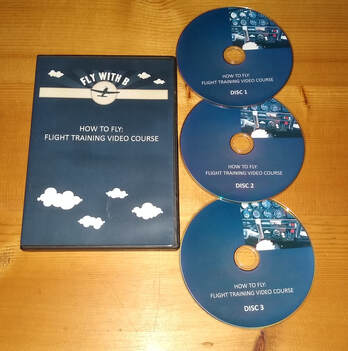
Get the Complete DVD Set
Original Price: $75 plus shipping
On Sale:
Just $39 with Free Shipping
Contact
Please feel free to contact me with any question you might have.
Brendan Quinn-Narkin
talkwithb@gmail.com
(408) 858-7405
talkwithb@gmail.com
(408) 858-7405